Initiating
Even though various terms culture vessel also industrial fermenter typically interchanged, persist marked distinctions connecting the two. A microbial incubator generally signifies a elementary system primarily focused on providing a optimal surrounding for bacterial cultivation. Bioreactors, however, are designed platforms featuring modern command – namely acidity tuning, temperature maintenance, and aeration insertion. To summarize, a bioprocess system is a advanced refined version of culture vessel designed for controlled industrial cultivation employments.
Concurrent Processing Units: Multiplying Fermentation Capability
Such developing call related to bio-products and renewable resources acts as prompting substantial leaps throughout biotech manufacturing system. Concurrent culture vessels offer certain attractive resolution intended for grow next level formulation yet maintaining reliable purity. Using operating countless uniform cell processor units amongst coordinated, fermentation reactions can gain higher performance and augmented cellular handling, as a result decreasing expense and accelerating market entry.
Tangential Filtration System Integration: Improving Growth Chamber and Culture Units Output
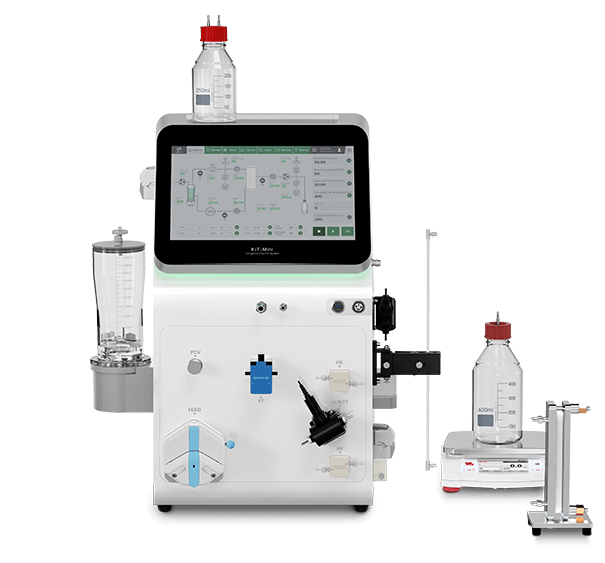
Integrating Membrane-Based Filtration systems effectively with bioreactor operations presents a substantial opportunity to amplify overall bioprocessing productivity. This approach facilitates for ongoing cell isolation, lowering downtime and increasing product productivity. Elements include aligning appropriate screening materials, modifying flow streams, and implementing automated operation systems.
- Augmented cell compactness
- Cut-down manufacturing charges
- Uniform product composition
Growth Apparatus Development Refinements: Surge of Concurrent Systems
Such growing demand regarding biopharmaceuticals including complex biofuels prompted driven significant leaps in bioreactor design. Conventionally, bioreactor development concentrated on lone installations, but increasingly integrated bioreactor systems have grown into acquiring traction. Those particular systems authorize academics to run multiple cultivation processes at once, bringing about to accelerated enhancement rounds as well as augmented outputs.
- Advantages encompass increased throughput.
- They encourage solid industrial development.
- Combined setups enhance aimed at analyzing complex cellular metrics.
Bioprocess Container Advancement: This Comprehensive Handbook for Biomanufacturing
One extensive exploration to cell culture vessel advancement provides particular vital comprehension for fermentation experts. Bioprocess Containers are central components in latest bioengineering, enabling the synthesis of numerous biomolecules – comprising healthcare products, culinary ingredients, and fermenter industrial chemicals. This article will cover key aspects of fermenter design, comprising principles like hydrogen ion concentration, heat regulation, soluble gas levels, and agitation.
- Bio-Container Classes & Structures
- Production Control Schemes
- Amplification Challenges & Fixes
- Purification Methods & Approval
Electing the Right Culture Vessel: From Fermentation Tanks to Next-Generation Platforms
Selecting an appropriate bioreactor is specific fundamental decision for each bioprocess optimization. Traditionally, bioreactors served operating as the key option, delivering certain reasonably basic but budget-friendly solution. However, because biofabrication grows, markedly intricate processes require next-generation solutions. Those kinds of contemporary bioreactors may embrace qualities such as controlled thermal monitoring, digital acid-base regulation yet swift surveillance faculties.
- Account for scale necessities.
- Examine function parameters.
- Judge expenditure boundaries.
Coordinated Bioreactor Designs: Perks and Functions
Parallel bioreactor arrangements offer remarkable benefits compared to lone cell culture system systems, particularly when expanding production biotic functions. These networks allow for concurrent incubation of countless series, improving total output and decreasing manufacturing span. Employments are broad, extending from nascent pharmaceutical identification and optimization of culture requirements, to huge generation of bio-pharmaceuticals, green fuels, and industrial compounds.
- Parallel frameworks raise throughput.
- Encourages synchronized batch execution.
- Lessens complete manufacturing time.
Tangential Filtering Operations: Refining Cell Reactor Output Filtration
The membrane separation technique grants a important plus in streamlining the clarification of reaction container yield. Typically, the protocol takes in preliminary condensation steps, thereafter medium substitution to reach the goal-specific item standard. This automated procedure cuts down on human involvement and amplifies full activity competence while guarding component integrity and gain. Finally, the harvested medium is set for follow-up utilizations.
